
Our Science
Evaluate candidates like a real person would
Not a black box. A governed, evidence-based system that learns your hiring bar and proves it can apply it at scale.
Trusted by Enterprise Talent Acquisition Teams









If you can't review it, you can't defend it.
AI screening feels too much like a black box

No visibility: Can’t see how it’s judged

No control: Can’t determine what it values

No alignment: Can’t measure if it matches your team’s decisions
Trust Score proves AI matches your hiring bar
AI/Human Calibration Mode
Ensures the hiring team and the AI are aligned

Agreement
response to rubric
from disagreements
IO Informed AI Rubric Builder
Controls and shows how AI evaluates answers
Evidence-backed AI Recommendations
Defendable recommendations with AI rationales, confidence scores and candidate recording references
Giving enterprises
control
evidence
calibration

IO-Informed AI Rubric Builder
Turn any role into a clear scoring rubric
Start with a job title or description, then define what “great” looks like. You can see and control the skills, questions, and scoring standards the AI will use.


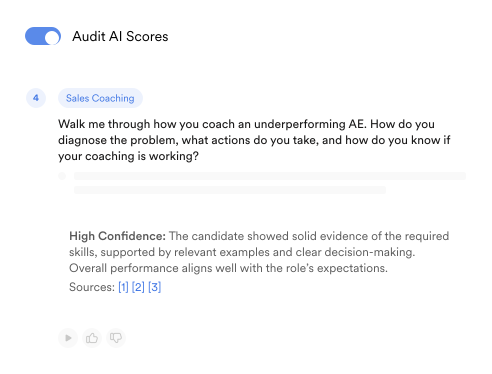
Evidence-backed AI Recommendations
Every score comes with the why
The AI explains how it scored each response, how confident it is, and points to supporting moments in the candidate’s interview so reviewers can verify and decide.

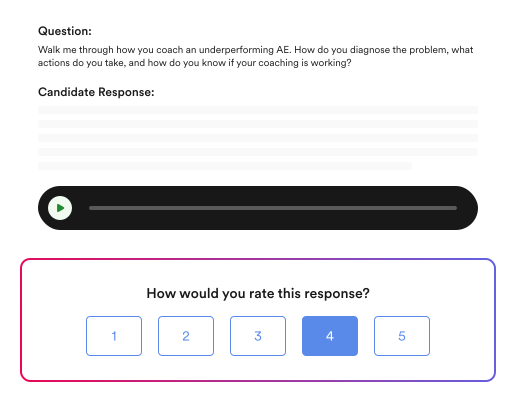
AI/Human Calibration Mode
Calibrate the AI to your team’s judgment
Your team scores a small set of responses independently. When evaluations differ, the system highlights the discrepancy so you can refine the rubric and improve alignment.
What you can review and audit

The rubric used for the role
Score rationale tied to candidate responses
Interview recording references for verification
Calibration history showing how the bar evolved
Decision trail of reviewer actions and outcomes
Signals
Trait signals based on word choice and language proficiency
200+
Measures 200+ traits
CEFR
CEFR English scores
27k
27k research citations
Language model used by:


Powerful signals to complement assessment tests
Traditional Self-Report Tests
Language-Based Assessments
Input
Quizzes with self-ratings
Analysis of word choice
Insight Type
Self report: What people think they’re like
Observed: How people actually communicate
Time Add

High - adds extra interview step
None - done during interview
Candidate Dislike
Fewer complete because it takes 5-20 min
None - No additional step, unnoticed
Fraud Risk
High - easy to fake or bias
Low - hard to manipulate language patterns

Capture more signal, without adding more steps
Measure job-relevant traits from natural language
Traits Assessment
Measure 200+ Traits
Automatically measure job-related traits from word choice for any role.

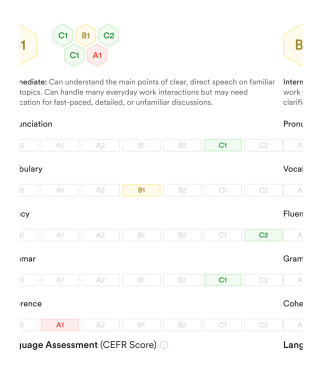
Language Assessment
CEFR English Scores
Automatic CEFR English proficiency scoring.




FAQs
Frequently asked questions
How does the AI know what the hiring bar is for a specific role?
The system starts by converting a job description into an I/O informed interview script that defines the questions and scoring standards for the role. Hiring teams can review and adjust this rubric, so the AI evaluates responses using the same criteria your team would use.
What is the Trust Score, and why does it matter?
Trust Score measures how closely the AI’s evaluations match the hiring team’s own scoring decisions. During calibration, the system compares human and AI evaluations and highlights disagreements. As alignment improves, teams gain confidence that the AI is applying their hiring standards consistently at scale.
How does the system avoid being a “black box” AI?
Every recommendation from the AI includes an explanation of how the candidate response was scored and references moments in the interview that informed the score. This allows reviewers to verify the reasoning behind each evaluation.
Do humans still make the final decision?
Yes, always. The AI Interviewer produces structured evidence and recommendations, but hiring teams stay in control of the decision.
What kind of evidence can recruiters see?
Reviewers can see how answers were scored against the role criteria, the rationale behind scores, and references to the candidate’s interview responses so decisions are easier to review and stand behind.
